Tribal Casino Uniforms Built Around Your Nation's Visual Heritage
Bespoke dealer vests, dealer shirts, and pit-boss suits with self-measure online ordering across multi-property gaming operations and 6-week refresh cycles.
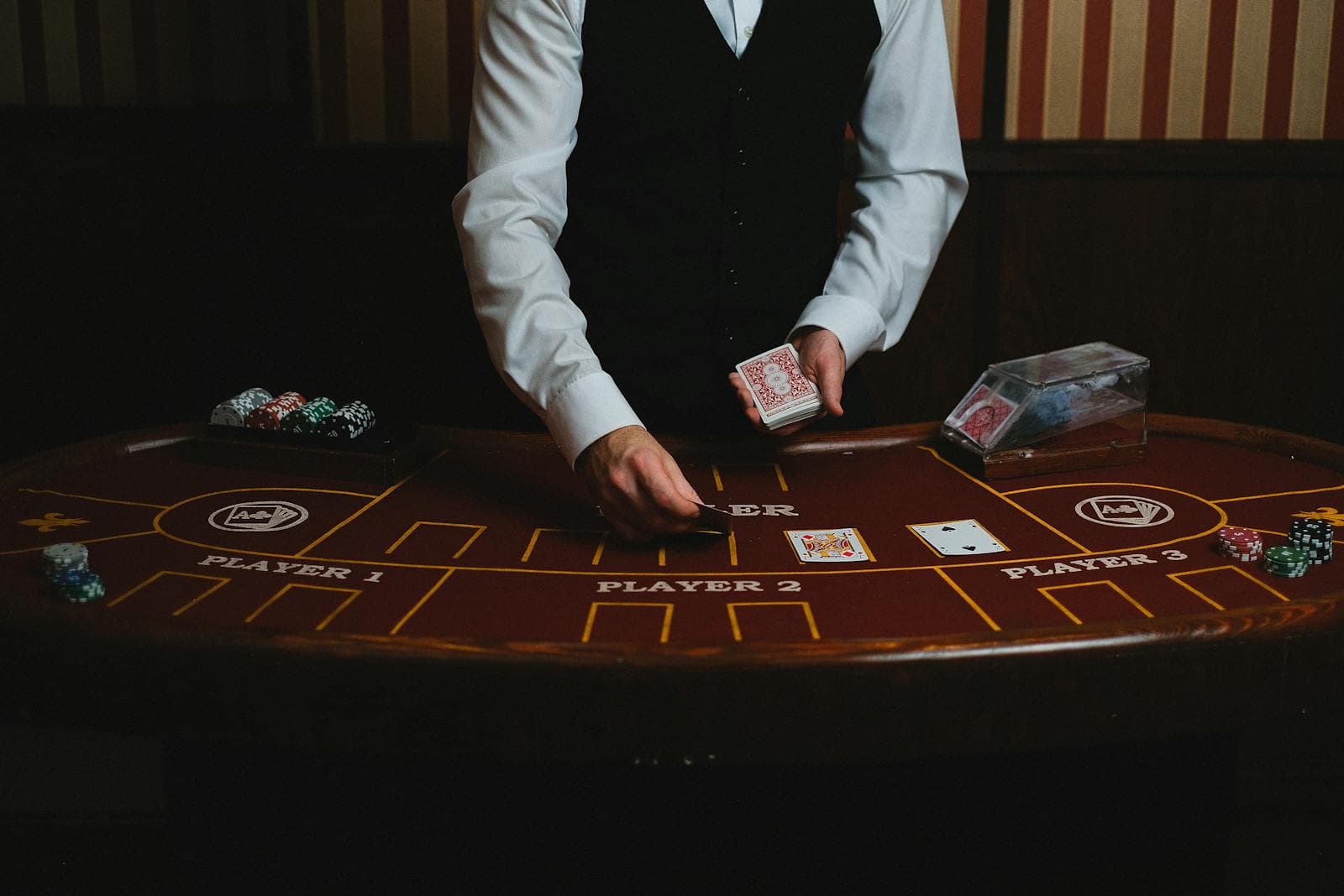
casino dealer uniforms
The Casinos Uniform Reality
A 250-person casino floor is a logistical organism that most apparel vendors are not built to dress. On any given Friday swing shift, you have 80 to 110 dealers rotating across blackjack, baccarat, three-card poker, craps, and roulette, with pit bosses walking a hierarchy that has to read instantly to a guest who needs to find authority on a busy floor. The dealer vest and dealer shirt are the working uniform of the house — high-touch, high-wash, exposed historically to smoke and constantly to spilled cocktails. Pit bosses and floor managers step up to full suits, and the visual gradient between dealer, floor, and shift manager is part of the property's service architecture. Gaming commission dress codes mandate that this hierarchy be enforced and consistent.
At tribal gaming properties, the uniform is also a cultural surface. Pueblo nations, Pacific Northwest tribes, and Gulf-coast nations have specific palettes, geometric vocabularies, and woven-pattern traditions that belong to the nation, not to a vendor's catalog. NIGA member properties increasingly expect their floor uniforms to reflect the sovereign identity of the operator — not generic black-vest hospitality wear pulled from a Midwest warehouse. The cultural-design dimension is procurement-relevant, not decorative. It signals to guests, to tribal council, and to staff whose house this is.
Why Current Procurement Is Broken
Where every existing supplier fails this buyer
The mainstream casino-uniform incumbents were not built for sub-500-staff regional and tribal operators. Stock Mfg ships a corporate catalog — pick a vest color, get a vest. WaitStuff Uniforms operates the same playbook one tier down. Top Hat Imagewear and Sharper Uniforms route everything through a corporate program model that minimums-out smaller properties and treats cultural design as a custom upcharge requiring six-figure commitment. None of them genuinely engage with tribal motif integration as a design discipline; at best you get a logo embroidered onto someone else's silhouette. Cintas is a different animal entirely — a rental and laundry vendor. Staff never own the garment. It comes off a truck, gets washed in a central plant, and rotates back. Morale on a casino floor where dealers wear someone else's clothes home in a laundry bag is a documented problem, and rental programs don't solve cultural-design needs at all.
The Nathan Tailors Approach
Nathan Tailors builds bespoke uniform programs sized for the 200-to-500-staff regional and tribal casino floor. We integrate tribal motifs, color palettes, and pattern vocabularies directly into dealer-vest and dealer-shirt construction — woven-in jacquard panels, embroidered yokes, palette-matched lining, council-approvable proofing. Design is collaborative with the nation's cultural office, not extracted from a stock library. Self-measure ordering means a 250-person floor can be sized in days, not months. Each staff member submits measurements through a guided online flow; we hold the property's design template and produce against it on a repeating cycle. Replacement vests, new-hire onboarding garments, and the 6-week refresh that heavy-wear casino floors require all run off the same template — no re-tooling, no re-design fee, no minimum re-order.
For operators who already understand supply chain
The Supply Chain Open Secret
What sharp operators have always known about “domestic” uniform pricing.
Most “American-made” or “British-tailored” corporate uniform programs are cut and sewn in Vietnam, Bangladesh, or China — then marked up three to five times between the factory and your invoice. The Brooks Brothers corporate suit. The Hugo Boss store program. The hotel uniforms at the property down the street. They all start within a few hundred miles of our atelier in Hoi An.
We are the factory-direct version of that supply chain. Same Italian wool — Vitale Barberis Canonico, Reda, Marzotto. Same hand-finished construction, same lapel canvas, same hand-stitched buttonholes. We just don't have the US distribution layer between us and your loading dock.
The casinos operators who run our program tend to be a particular type. The ones who built their margin by cutting middlemen out of their P&L. The ones who instinctively recognize when a price reflects actual cost versus brand mark-up. They run our program quietly. When a peer at a conference compliments their team's uniforms, they smile, say “thanks,” and maybe lean in for the longer conversation about how to do the same.
How Casinos Use the Program
Real workflows we run for procurement teams in this category
Tribal Motif Integration into Dealer Vest Program
We work with the nation's cultural office or design council to translate tribal pattern vocabulary into dealer-vest construction — woven jacquard panels, embroidered yokes, palette-locked lining. Once approved, the design becomes the property's repeatable template. Every new-hire vest, every refresh-cycle replacement, and every bench order produces against the same locked-in spec. Dealers wear something that signals whose house this is.
Pit Boss and Floor Manager Suit Hierarchy
The visual gradient between dealer, floor manager, and shift manager is part of casino service architecture. Pit bosses move up from vest-and-shirt into full bespoke 2-piece suits in property-coordinated fabrics. We hold each pit boss's measurement profile and reproduce identically across replacement cycles. Floor managers can step up further into structured jackets with subtle cultural-design accents — pocket-square palette, lining motif, embroidered interior label.
Property Opening or Re-Brand Fleet Order
New tribal casino openings and re-brand events require the entire front-of-house dressed at once — 200-to-500 garments delivered to a hard date. Self-measure rolls out to staff in the four-week window before opening; production runs in parallel; shipping consolidates to the property loading dock on a tight calendar. The same template then becomes the ongoing program; opening-day fleet and year-three replacement run off identical specs.
Hospitality-Side Service Staff (Cocktail and Hosts)
Table-side cocktail servers, casino hosts, and high-limit-room attendants sit adjacent to the dealer uniform program but require their own silhouette and palette. We extend the property template into a hospitality-side variant — coordinated palette, related but distinct cut, often a slightly different fabric weight for service-staff comfort. The property reads as a single visual ecosystem; each role still has its own working garment.
How We Compare to Existing Suppliers
Honest read of where each incumbent works — and where they don't
Stock Mfg
Their pitch
Corporate catalog of pre-built vest, shirt, and apron silhouettes for hospitality and casino programs.
Where they fall short
Cultural-design integration is treated as a custom upcharge requiring high minimums. Sub-500-staff tribal properties are out of scope. Tribal motif work is, in practice, a logo embroidery — not a woven design collaboration with the nation.
WaitStuff Uniforms
Their pitch
Basic catalog vendor for restaurant and casino dealer uniforms, value-tier pricing.
Where they fall short
No cultural-design capability at all. Pure stock-catalog model. Treats tribal casinos as identical to a Midwest steakhouse procurement. No engagement with sovereignty, council approval, or motif vocabulary.
Top Hat Imagewear / Sharper Uniforms
Their pitch
Corporate uniform programs for mid-to-large hospitality and gaming operators, branded apparel embroidery.
Where they fall short
Built for chain-hotel and commercial casino procurement at scale. Sub-500-staff tribal properties hit minimum floors that don't justify the program. Cultural-design conversation is sales-engineered, not design-engineered.
Cintas
Their pitch
Rental and industrial laundry vendor — uniforms come off a truck, get washed centrally, rotate back.
Where they fall short
Different model entirely. Not a direct competitor — staff never own the garment, no cultural-design integration, no per-property template. Solves linen logistics, not uniform-program design. Documented morale issues with rental on a casino floor.
Nathan Tailors
Our pitch
Bespoke construction, online self-measure, repeatable design template, fleet pricing — direct from a Hoi An atelier with 25 years of operating history.
What this unlocks
Roughly 50% lower per-suit cost than US/UK MTM, identical fleet specs across every reorder, no in-person fittings, ship to office or staff homes globally.
The Math, on a Real Order
Tribal gaming property, 250-staff floor, annual refresh
Domestic MTM Supplier
$400,000
250 staff × 2 suits × $800 per suit
Nathan Tailors Program
$175,000
Same staff count, same suit volume, at $350 per bespoke suit
Total program savings on this scenario
$225,000
Reinvested into staff training, refresh frequency, or simply protected margin
How It Works
From first quote to staff fully outfitted — typically 5 to 7 weeks end-to-end.
Design Brief
Send your spec, brand colors, mood board. We confirm fabric library, silhouette, and crest/embroidery within 72 hours.
Sample Round
One sample garment built to a nominated staff member. Worn for fit, drape, brand-color verification before fleet production.
Self-Measure
Each staff member completes our 12-step guided online flow on their phone. 8–10 minutes per person, no in-person fitting.
Production & Ship
Bespoke production in our Hoi An atelier, then shipped to your office or directly to staff. Full international tracking.
Casinos Procurement FAQ
Common questions from casinos buyers evaluating our program
How does tribal motif design and cultural-respect sourcing actually work?
We start by engaging the nation's cultural office, design council, or designated council representative — not a stock pattern library. Pattern vocabulary, palette, and motif use are defined by the nation. We produce woven jacquard or embroidered proofs for council review and don't move to production until the approval is on file. The locked design becomes the property's reorder template. Cultural-design respect is procedural, not decorative — we treat the motif as the nation's intellectual and cultural property, used under the property's authority, not licensed by Nathan.
Do your uniforms meet gaming commission dress code standards?
Yes. Gaming commission dress codes are written around hierarchy visibility, name-tag placement, embroidery legibility, and consistency of cut across shifts. Bespoke construction makes commission compliance easier, not harder — every garment is produced against a locked spec, so floor-to-floor consistency is tighter than in a corporate-catalog program with multiple SKU drops. Pit-boss visual hierarchy, dealer-vest pocket configuration for chip handling, and shirt-tail length for tucked-in compliance are all part of the design brief.
How does self-measure work for a diverse 200-to-500-person staff?
Each staff member completes a guided online measurement flow with reference photos and video walkthroughs. The flow accommodates the full size range a casino floor actually employs — petite to plus, every body type. Properties typically run a 2-to-4-week self-measure window with on-site reminders. We accommodate staff who prefer in-person measurement through a property HR-led group session using our measurement template. Initial fit-check garments can be produced for a small representative sample before the full fleet runs.
What's the refresh cycle and how much stock do we need to hold?
A casino floor is heavy-wear — we typically recommend a 6-week refresh cadence on dealer shirts and a 6-month rotation on dealer vests, with property-held safety stock equivalent to roughly 15% of headcount for new-hire onboarding. Because the design template is on file, the property doesn't pre-buy and warehouse a year of inventory. Reorders run against actual headcount and refresh schedule, with 3-to-4-week lead time from order to property loading dock.
Can you embroider both property name and tribal nation insignia?
Yes — and this is industry-standard for tribal gaming. Property name typically goes on the chest or sleeve in property-palette thread; tribal nation insignia placement is determined by the council and ranges from interior label, to embroidered yoke, to woven-in jacquard panel. Embroidery thread color is matched to the approved palette. We hold both digitization files on the property's account; reorders reproduce identically.
What's the realistic lead time for a property re-brand fleet order?
Six to ten weeks from design lock to delivery for a full 200-to-500-staff fleet. The critical path is design approval through the cultural office or council — that typically runs 2-to-4 weeks. Once the template is approved and self-measure is complete, production and ocean shipment to the property runs 3-to-4 weeks. We've delivered to hard property-opening dates; we plan procurement backwards from your opening calendar, not forwards from order date.
How does this work with tribal council procurement and net-30 billing?
We invoice property-direct or to the gaming authority depending on the procurement structure. Net-30 terms are standard for established properties; we accommodate tribal council procurement workflows including the longer single-cycle approval that tribal sovereignty introduces. Master service agreements covering the design template, repeating refresh orders, and pricing-locked terms are common — once council approves the program, individual reorders don't require re-approval. We handle international shipping, customs clearance, and delivered-to-dock terms; the property doesn't manage import logistics.
Where We Meet Casinos Procurement Teams
NIGA Trade Show & Convention — gaming directors, tribal council procurement officers, and property GMs gather annually; uniform-program decisions for the following fiscal cycle are routinely committed there.
Other Corporate Uniform Programs
Ready for a Corporate Quote?
Tell us your headcount, your role mix, and your brand brief. We'll come back within 72 hours with a fabric story, a sample plan, and a delivered cost per uniform — no obligation.
For procurement teams: net-30 terms available after first paid order. We invoice in USD, GBP, or CAD.