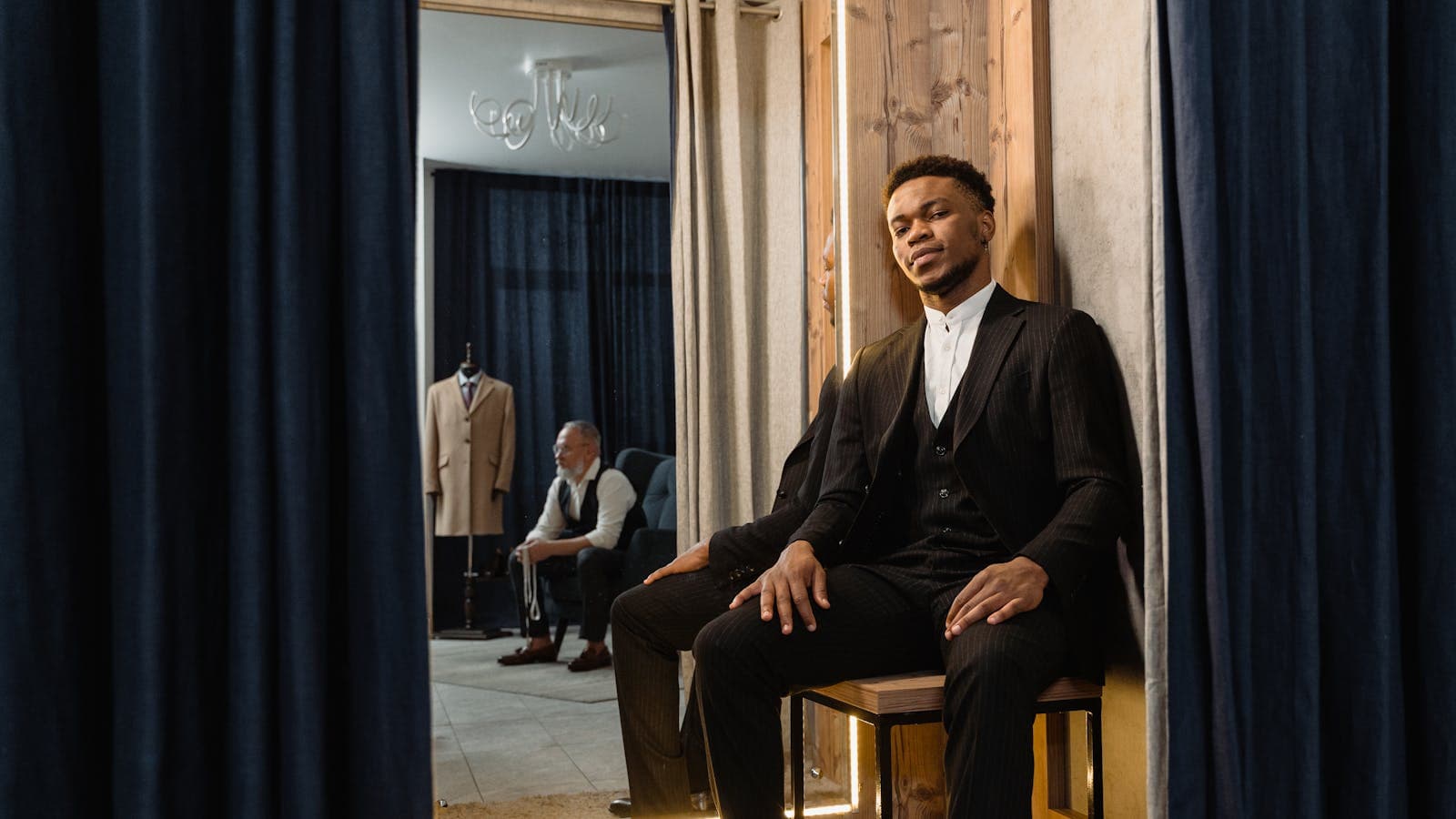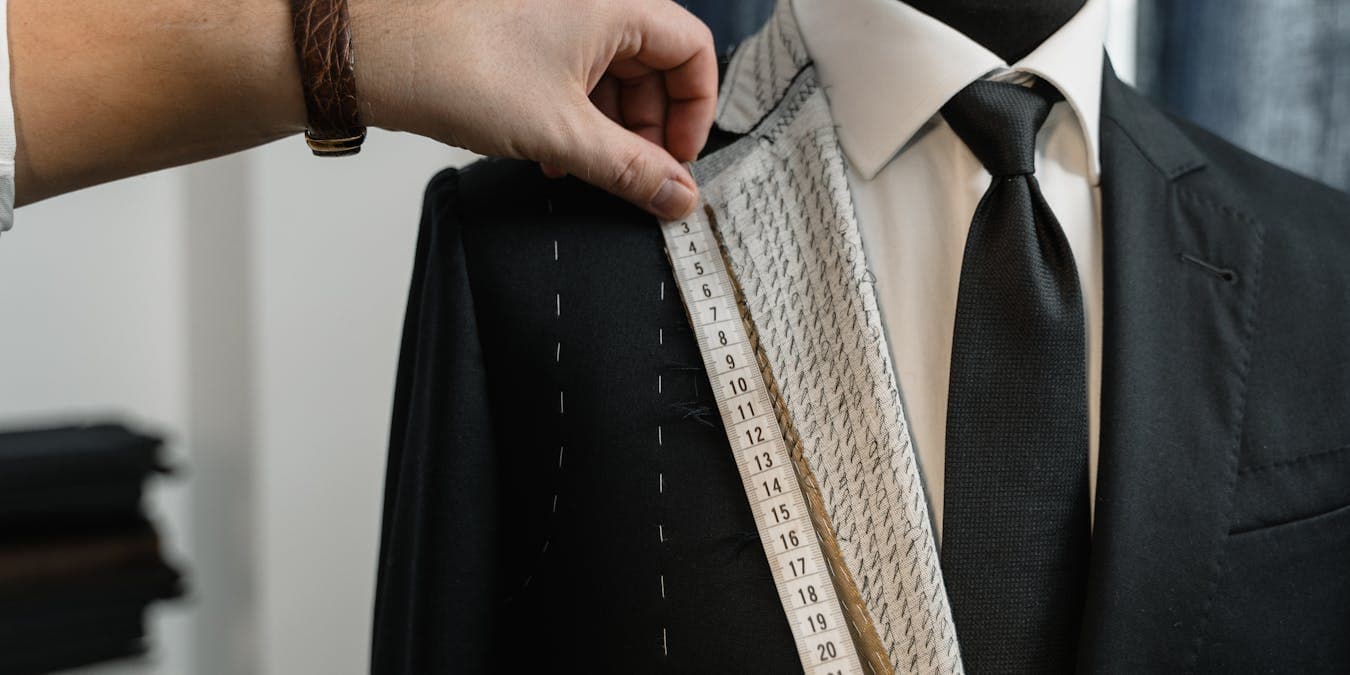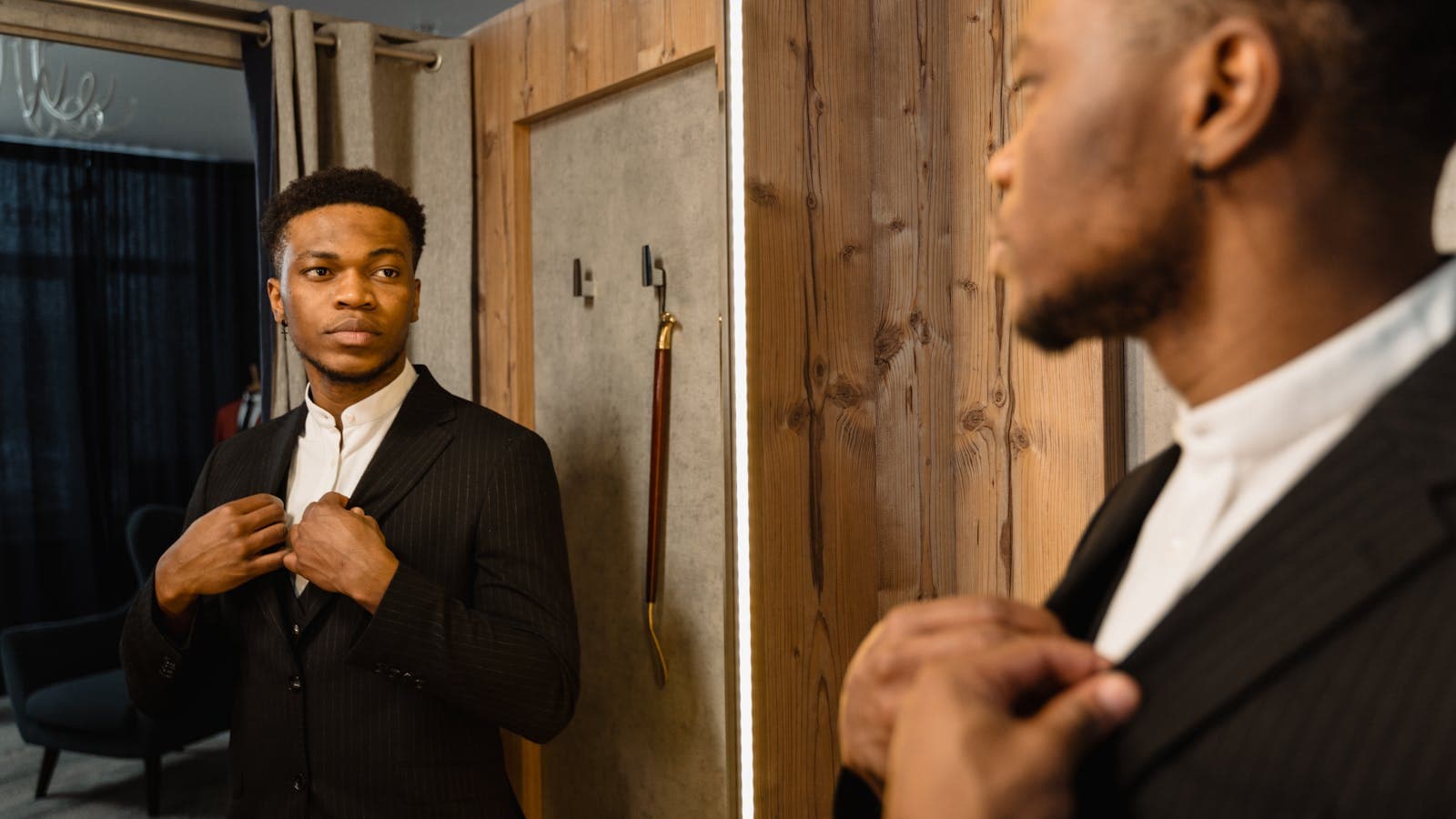
What It Is, In One Paragraph
A Mandarin collar suit (also called a band-collar, stand-collar, or Nehru-collar suit, and in Chinese the Zhongshan or Tang cut) is a jacket with a short, upright collar band and no lapels. No notch, no peak, no shawl. The collar stands about 2-4cm tall around the neck, the front closes with a straight line of buttons, and the silhouette reads cleaner, quieter, and more modern than anything with a Western lapel. Paired with matching trousers it becomes a suit that signals, simultaneously, global-modern (Tokyo 2020s) and deeply traditional (China, 1911).
It is the single most wearable piece of the Chinamaxxing wardrobe. It is also nearly impossible to buy off-the-rack in North America or Europe at anything above costume quality, which is exactly the case for getting one cut properly.
A Very Short History
The Mandarin collar as we know it dates to the Qing dynasty court robes — the narrow upright collar on the changshan (long gown) worn by men from about 1640 onward. When Sun Yat-sen overthrew the Qing in 1911, he commissioned a modernized suit that combined Chinese structure with Western tailoring discipline: four pockets for the four virtues, five buttons for the branches of government, and — crucially — the Mandarin collar retained from the robes his generation had worn as children. That suit became the Zhongshan suit (中山装), named for him, and was worn as formal dress by every Chinese leader from Chiang Kai-shek to Mao Zedong to Deng Xiaoping. In the West it was misnamed the "Mao jacket" in the 1960s, which is why most Americans today associate the silhouette with Communist functionaries rather than with the tailoring tradition it actually came from.
The Shanghainese Red Gang tailors who fled to Hong Kong in 1949 continued cutting Zhongshan suits for the diaspora bourgeoisie throughout the 20th century. Vietnamese ateliers in Hoi An and Saigon — staffed by the same Chinese-merchant tailoring tradition, see our Shanghai-Hoi An heritage piece — cut them continuously for local weddings and diplomatic events. The cut never went away in Asia. It simply never arrived in the Western mainstream.
That's starting to shift. Mandarin collar jackets have appeared in the last three seasons from Prada, Dries Van Noten, Thom Browne, and Ring Jacket. Red-carpet menswear — Timothée Chalamet at Venice, Dev Patel at the Oscars — has pushed it steadily. The Atelier added a Mandarin-collar archetype to our preset roster this spring. It's a quiet return, the way everything in Chinamaxxing arrives: slowly, then obviously.
Why the Mandarin Collar Works Right Now
- It bypasses the "suit is corporate" problem. A notch-lapel two-button in 2026 reads "business meeting" to most observers, full stop. The Mandarin collar reads as intentional dress — formal but not corporate, considered but not costume.
- It photographs exceptionally well. The clean line from throat to hem gives the face full authority without lapel fuss. Red-carpet stylists have clocked this; that's why it's showing up on every major premiere.
- It works without a tie. There's no lapel to collapse into, so the open collar looks deliberate rather than incomplete. This is the single most practical feature if you're wearing a suit to events where a tie would overdress.
- It's fabric-forward. Strip away the lapel notch and button stance and you're left with the fabric doing all the talking. Good cloth shines; bad cloth embarrasses itself. This is why bespoke matters more for Mandarin cuts than for conventional ones.
The Build: What to Actually Order
Collar height
3cm for most bodies. Higher (4-5cm) reads more traditional and court-formal; lower (2cm) reads modern-minimalist, closer to what Ring Jacket or Dries would put out. 3cm is the sweet spot: visible, clean, neither costume nor corporate. Specify this precisely — off-the-rack brands are inconsistent here and it's the single detail most likely to be wrong.
Front closure
Two choices:
- Single-breasted, four or five button straight placket. The traditional Zhongshan cut. Buttons sit in a clean vertical line from the collar band to about 8cm above the hem. This reads most Asian-heritage.
- Single-breasted, hidden-placket one or two button. The modern international cut. Buttons are covered by a fabric fly. Cleanest possible line. This is the Ring Jacket / Prada interpretation.
For a first Mandarin suit I'd recommend the hidden-placket two-button — it's the most versatile, works at both formal and smart-casual events, and ages best.
Pockets
Jetted or welted hip pockets, no flaps. Patch pockets read too casual for this silhouette. No chest pocket at all — or, at most, a jetted one without a breast-pocket welt. The entire point of the Mandarin collar is the clean line; flap pockets interrupt it.
Shoulder
Natural to softly structured. Avoid roped shoulders or heavy padding — they fight the minimalist line. Neapolitan spalla camicia (shirt-shoulder) construction works beautifully if your cutter can execute it; otherwise a clean natural shoulder with half-canvas construction is the default.
Length
Slightly longer than a Western suit jacket — 3-5cm longer than a standard two-button. The proportions of the Mandarin collar benefit from more vertical line. If your regular jacket length is 74cm, have this one cut at 77-79cm.
Trouser
Matching fabric, straight leg, mid-rise, half-break, no cuffs. The Mandarin suit is not a place for cuffed or high-rise Gurkha trousers. Keep them quiet — the jacket is doing the work.
Fabric: The Decisive Choice
Because there's no lapel to catch the light, fabric does 90% of the visual work. Pick wrong and the suit reads flat or cheap; pick right and it becomes the best jacket you own.
For year-round wear: Wool-cashmere blend, 280-310g
This is the default. Wool-cashmere in midnight navy, deep charcoal, or forest green gives the Mandarin cut the matte, soft-hand reading it wants. 280-310g is the sweet spot — substantial enough to drape, light enough for 3-season comfort. Browse our wool-cashmere catalog (129 fabrics in stock).
For formal events and evening: Wool-silk blend
A 15-25% silk blend gives the fabric a low, expensive luster under warm lighting. Perfect for Mandarin-collar tuxedos — and yes, this is a thing. A midnight-blue wool-silk Mandarin jacket is one of the most interesting formal-wear options available anywhere; bespoke houses in Hong Kong and Tokyo have been cutting them for black-tie events for years.
For warm-climate wear: High-twist tropical wool or cotton-linen blend
Stone, oat, warm sand, or pale olive. This is the summer-wedding / destination-event cut. The Mandarin collar reads particularly well in light colours because there's no lapel to create a dark-edge contrast problem against a pale body.
For traditional / wedding contexts: Silk jacquard or brocade
Only if you're pairing the Mandarin cut with a traditional Chinese wedding (the xi yi) or an East Asian cultural event. The brocade + Mandarin combination is the most culturally loaded and should be chosen deliberately. If you're not the groom at a Chinese wedding and not attending a lunar new year event, pick one of the three options above instead.
When to Wear It
Will absolutely work
- Creative industry events — gallery openings, design week, architecture awards, music industry.
- Destination weddings, especially in Asia.
- Black-tie events where you want to be remembered. (Pair with a crisp white dress shirt, no bow tie — the collar provides its own formality.)
- Red-carpet and stage appearances.
- Dinners at restaurants with dress codes.
- Any event in East Asia, any event with an Asian-cultural dimension.
Will work with the right styling
- Smart-casual office (in a lighter neutral fabric, worn over a fine knit instead of a dress shirt).
- Weddings where you're a guest, not the principal — dark fabric, conservative cut, no statement jewelry.
- Travel — the Mandarin collar doesn't ride up under a coat collar and looks cleaner on camera for video calls.
Will not work
- Conservative corporate environments (law firm, investment bank, management consulting). The Mandarin collar reads too deliberate for rooms that expect a notch lapel.
- Court appearances.
- Funerals (the collar's visual distinctiveness feels wrong for the context; pick a classic two-button instead).
The Pitfalls to Avoid
- Costume territory. If your Mandarin jacket comes with embroidered dragons, a wide sash, or visible Chinese characters, you've bought a costume, not a suit. The modern Mandarin is plain-fronted in a Western-tailoring cut.
- Cheap collar construction. The collar band has to hold its shape; a floppy or unstructured band ruins the whole garment instantly. Full-canvas or half-canvas construction only — no fused collars.
- Wrong fabric weight. Under 250g and the fabric looks papery at the seams; over 340g and the silhouette reads bulky. Stay in the 280-320g range unless you have a specific winter application.
- Overly slim cut. The Mandarin silhouette is meant to flow, not to hug. If your cutter offers you a "modern slim fit" Mandarin, ask for a classic or relaxed cut instead. Slim Mandarin jackets look like hotel uniforms.
- Too much hardware. Mother-of-pearl buttons, silk-thread button holes, self-fabric covered buttons, or small matte-metal ball buttons — pick one. Do not combine.
A Quick Primer: Mandarin vs. Nehru vs. Chinese Collar vs. Band Collar
These terms are often used interchangeably, but there are subtle distinctions:
- Mandarin collar — the generic Western term for a short upright collar with no fold. Usually 2-4cm tall. Most common label.
- Nehru collar — specifically the Indian interpretation, usually on a longer jacket (closer to a sherwani), often with a deeper front opening.
- Chinese collar — ambiguous; can refer to either Mandarin or the stiffer Qing-era court collar.
- Band collar — the modern minimalist Western interpretation, usually on shirts rather than jackets.
- Zhongshan collar — specifically the Sun Yat-sen / Mao jacket cut, typically with four pockets and five buttons.
- Tang suit — modern Chinese term for a jacket derived from the Qing magua, usually with frog closures and a shorter length. Distinct from a Zhongshan.
When you order from us, use the term "Mandarin collar" — it's the most universally understood, and your cutter can confirm the exact height and front-closure style before production.
Pricing
At Nathan Tailors, a custom Mandarin-collar suit (jacket + trousers) starts at $199-$279, depending on fabric. Wool-cashmere lands around $229. Wool-silk for black-tie runs $249-299. Linen for summer events is at the lower end around $189-229. This is the full-custom price — not a modification fee on an off-the-rack jacket, but a pattern cut to your measurements and constructed by hand.
Comparable cuts from Hong Kong bespoke houses run $1,200-$2,500; from European luxury labels (Prada, Dries, Thom Browne), $3,000-$5,500.
How to Order
Two paths:
- Render it first in the Atelier. Our AI style generator includes Mandarin-collar options in the custom quiz. Pick silhouette, fabric, colour, and era — the Atelier renders a full editorial image in ~45 seconds. Use it to confirm you like the proportions before you commit.
- Book a fitting directly. If you already know what you want, send us your measurements or message via WhatsApp / Telegram. Specify "Mandarin collar" and we'll send a confirmation quote with fabric options, collar-height choices, and front-closure options. Four-week turnaround, shipped worldwide.
One Last Note
A Mandarin-collar suit is not a beginner piece. It's a second or third suit — something you add after you own a well-cut navy or charcoal two-button notch-lapel that's served you for a year. It's distinct enough that you want to be sure you're at a stage where standing out in this specific way is desirable.
But once you cross that line, it becomes one of the most repeat-wearable garments in the wardrobe. Every event where you want to be dressed sharply but distinctly — not corporate, not costume — this is the cut. The Chinamaxxing generation has figured this out already. The rest of us are catching up.